Korea in February: Weather, What to Wear & Things to Do
February in Korea is still winter. This is the first thing I would want you to know, because the word “February” can make the arrival of spring feel much closer than it actually is.
In Seoul, some February days can feel very similar to January. Freezing temperatures are still normal, cold dry air can make a long day outside tiring, and you will still see plenty of people bundled up in padded winter coats. This is definitely not the month when I would start packing for spring.
But February does begin to feel slightly different as the month goes on. The days are getting longer, and toward the end of the month there can be small hints that winter is beginning to loosen its grip. I would think of those as a preview of the season ahead—not a reason to leave your winter coat at home.
For travelers, that makes February an interesting in-between month. You can still experience Korea as a winter destination, including skiing and the possibility of snow, while building your days around warm food, cafés, shopping, museums, palaces, and other indoor and outdoor experiences.
I would not choose February because you are hoping for early spring. But if you do not mind the cold and like the idea of seeing Korea during the quieter final stretch of winter, it can be a very enjoyable time to visit.
February in Korea at a Glance
Weather: February is still cold and generally dry. Mornings and evenings can easily fall below freezing in Seoul, although temperatures gradually begin to rise as the month progresses.
Best for: Winter travelers, skiing and snow activities, warm Korean food, cafés, shopping, cultural attractions, and travelers who are comfortable mixing outdoor sightseeing with indoor breaks.
Think twice if: You are expecting spring weather, want to pack light, or want to spend long uninterrupted days walking outdoors.
What to pack: A proper winter coat or long padded jacket, warm layers, gloves, a scarf, warm socks, comfortable shoes, and moisturizer or lip balm for the dry winter air.
Snow: Snow is possible, but I would never plan a Seoul trip around the expectation of seeing it. If snow is important to you, head to a ski resort or mountainous area instead.
One thing to check: Seollal, Korea’s Lunar New Year, can fall in January or February depending on the year. If it overlaps with your trip, check transportation and opening hours in advance.
My take: February is still a winter trip—not an early spring trip. But if you are comfortable with the cold, the final stretch of winter has its own appeal.
What February Really Feels Like in Korea
February is one of those months when the calendar can be slightly misleading.
By this point, winter has been going on for a while, so it is easy to imagine that Korea must be warming up. In reality, especially during the first half of February, Seoul can still feel firmly locked in winter. A sunny afternoon may look mild through a window and then feel completely different once you step outside.
What changes first is not necessarily the temperature. It is the feeling of the season. Daylight lasts a little longer, the sun can feel stronger, and toward the end of February there are occasional days when you sense that winter will not last forever.
But Korea’s transition between seasons is rarely a perfectly smooth line. A relatively mild day can be followed by another cold spell, so I would not change my packing strategy based on a promising weather forecast several days away.
If I were packing for Seoul in February, I would still pack for winter and treat any unexpectedly mild afternoon as a bonus.
February Weather in Seoul: How Cold Is It?
In Seoul, February has an average daily high of about 5.1°C (41°F) and an average daily low of about -3.2°C (26°F).
Those numbers are noticeably milder than January, but averages can make February sound more comfortable than it sometimes feels. Cold spells can still push temperatures well below the monthly average, and wind can make a day outdoors feel considerably colder.
The biggest difference is often the time of day. A sunny afternoon can feel relatively manageable when you are walking, especially later in the month. Early mornings, evenings, shaded streets, and windy areas are another story.
Korea’s winter air is also generally cold and dry, so the discomfort is not only about temperature. Dry skin and lips are common, and spending hours moving between heated indoor spaces and cold outdoor air can become tiring.
If you are visiting several parts of Korea, remember that Seoul is not a perfect stand-in for the whole country. Busan, for example, is considerably milder in February, with average daily highs around 10.2°C (50°F) and lows around 1.5°C (35°F).
For Seoul, though, my advice is simple: pack for winter first. If the weather turns out milder than expected, enjoy the bonus.
Does It Snow in Seoul in February?
Yes, it can snow in Seoul in February. But just like January, I would not choose February because you expect to see Seoul covered in snow.
Snowfall in the city is unpredictable from a traveler’s point of view. You might happen to arrive for a beautiful snowy morning, or you might spend an entire February trip seeing bare streets and clear winter skies. Even when snow falls, it does not necessarily remain picturesque for long.
If seeing snow is one of the main reasons you are coming to Korea, I would separate that goal from your Seoul itinerary. Spend your Seoul days enjoying Seoul, and plan a ski resort or mountain trip for a more reliable winter landscape.
February is still part of Korea’s winter season, so snow activities remain possible in many resort areas. Just check current resort conditions and closing dates before making the trip, particularly if you are traveling toward the end of the month.
What to Wear in Korea in February
The safest way to pack for Korea in February is to pack for winter and give yourself the option to remove a layer.
A warm padded coat or proper winter coat should still be the foundation of your wardrobe, especially if you plan to spend a lot of time walking outside. Underneath, I would wear layers rather than relying on one extremely heavy sweater. Heated cafés, restaurants, department stores, subway stations, and other indoor spaces can feel very warm compared with the street outside.
Thermal base layers are useful on particularly cold days, but you may not need them every single day—especially toward the end of February. This is where checking the forecast each morning becomes more useful than trying to dress for the monthly average.
I would also bring gloves, a scarf, warm socks, and comfortable walking shoes. If you are sensitive to cold, a hat or something that covers your ears can make a surprisingly big difference. And because winter air in Korea can be dry, lip balm and moisturizer are worth keeping in your bag rather than buried at the bottom of your suitcase.
Shoes do not necessarily need to be heavy snow boots for an ordinary Seoul trip. Comfortable sneakers or walking shoes can work on dry days. But if snow or ice is forecast—or if you are heading to a ski resort—choose footwear with better grip and appropriate insulation.
The mistake I would avoid is packing for “almost spring.” February may be the last full month of winter on the calendar, but your suitcase should still look like a winter suitcase.
What about late February?
Late February is where travelers can get fooled.
You may get a sunny afternoon that feels surprisingly pleasant, particularly while you are moving around. That does not mean the cold season has suddenly ended. Temperatures can drop quickly after sunset, and another cold day can follow immediately afterward.
Rather than replacing your winter clothes with spring clothes, I would simply make your layers more flexible. A coat that works over lighter inner layers gives you much more freedom than packing as though March has already arrived.
Things to Do in Korea in February
February is still winter, but it does not have to be a month spent hiding indoors. In fact, this can be a nice time to experience Seoul at a slower pace, fit in one last proper snow day, and enjoy outdoor sights without the crowds you would expect during Korea’s more famous travel seasons.
The key is not trying to pretend it is spring. Plan around the cold, keep your days flexible, and use February for the things winter actually does well.
1. Enjoy Seoul at the quieter end of winter
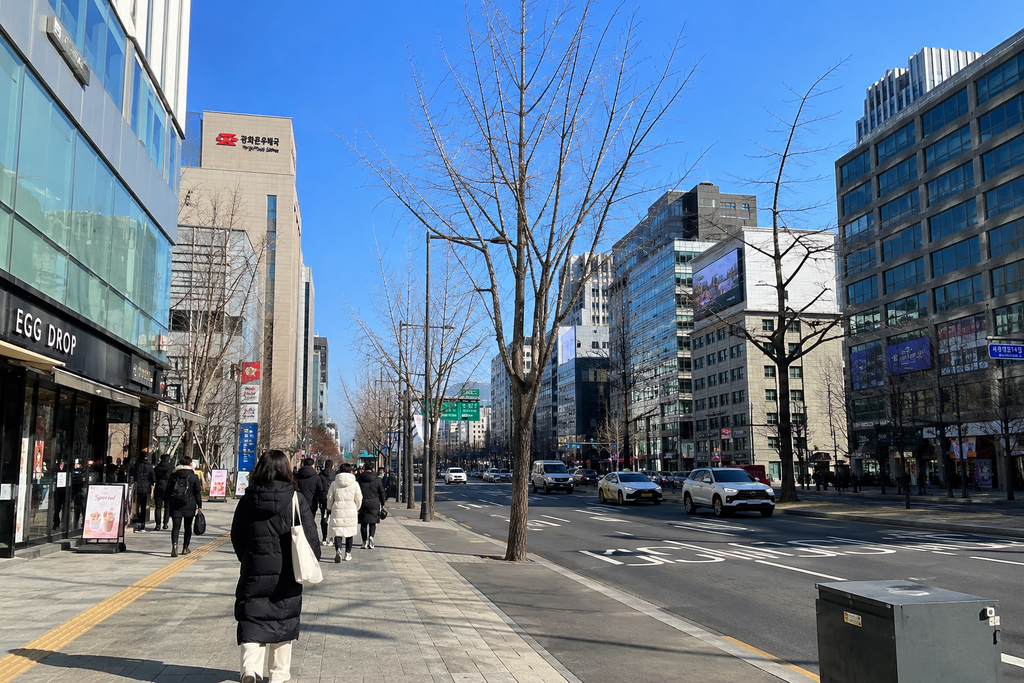
One thing I like about February is that Seoul is still very much in winter mode, but the season is beginning to feel less severe.
On a clear day, this can be a surprisingly good time simply to explore the city. Popular neighborhoods and major sights do not have the cherry-blossom crowds of spring or the autumn-leaves crowds of October and November, and bright winter skies can make the city feel crisp and open.
I would still avoid building an itinerary that keeps you outdoors nonstop from morning until night. Instead, walk for a while, stop somewhere warm, then head out again. February works much better when you treat cafés, shops, museums, and meals as natural breaks rather than trying to squeeze every possible attraction into one day.
And do not underestimate the difference between sunshine and shade. A street that feels perfectly manageable in the afternoon sun can feel dramatically colder once you turn a corner or the sun begins to disappear.
2. Catch the final stretch of ski season
If skiing or snowboarding is part of your Korea trip, February can still be an excellent time to go.
Rather than waiting for snow in Seoul, I would deliberately plan a day—or an overnight trip—to one of Korea’s winter resort areas. Gangwon Province is the obvious direction to look, with multiple ski resorts and much more reliable winter scenery than the capital.
This can also work even if you are not a serious skier. Depending on the resort, there may be sledding, gondola rides, beginner slopes, or simply the chance to spend a day surrounded by actual snow.
The important thing later in February is to check current conditions before you go. Ski seasons do not end on exactly the same date every year, and weather, snow conditions, and resort operations can vary.
3. Visit a palace or traditional neighborhood on a clear winter day
February can also be a good time to visit Seoul’s palaces and traditional neighborhoods—especially on a clear, sunny day.
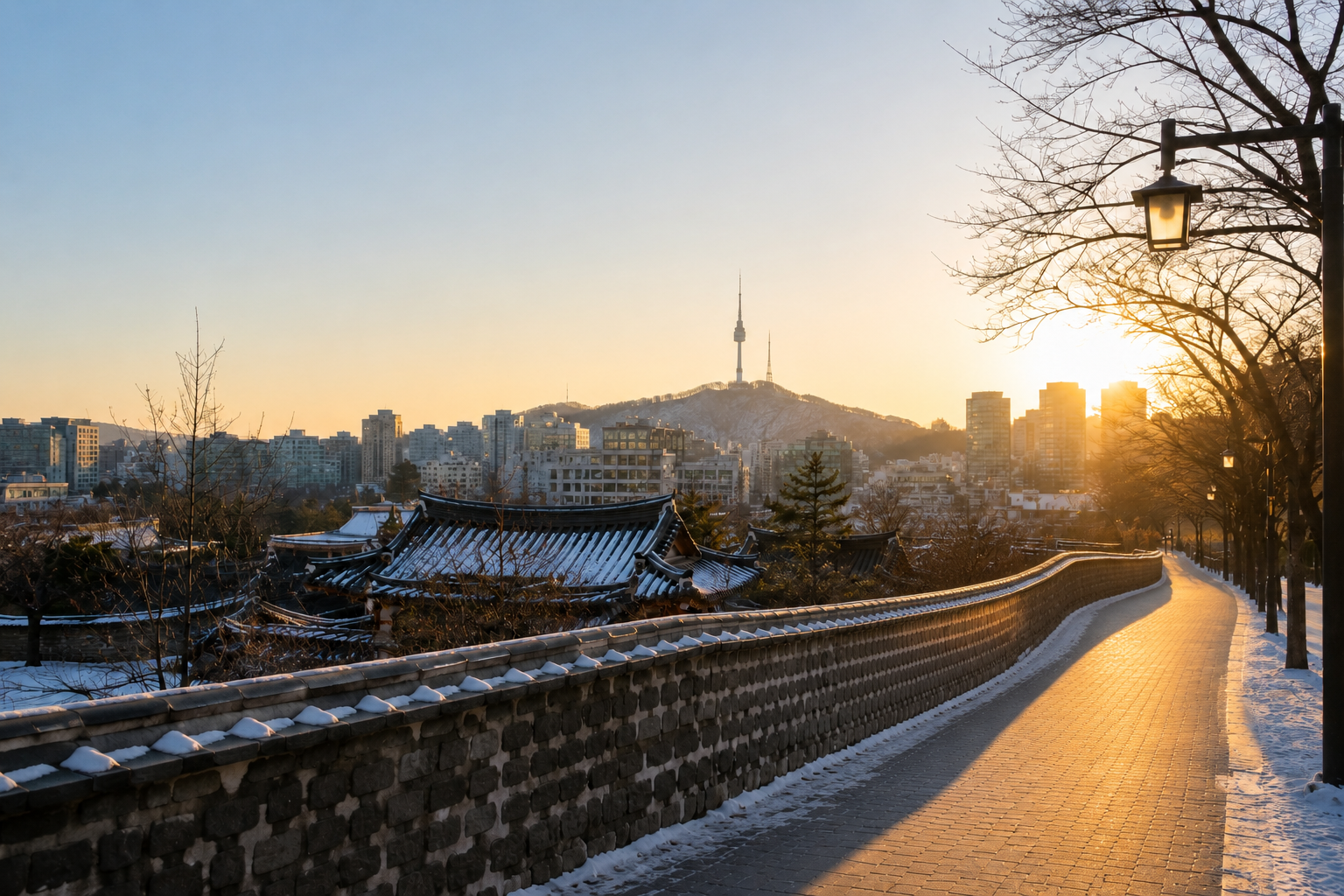
You will not have spring blossoms or autumn foliage framing the buildings, but winter has its own advantage: bare trees, crisp air, and fewer seasonal crowds can make historic areas feel quieter and more spacious.
Places such as Gyeongbokgung, Changdeokgung, and Bukchon are still largely outdoor experiences, though, so I would choose the day carefully. A calm, sunny afternoon can be lovely; a windy, bitterly cold morning can turn the exact same itinerary into something you rush through.
My approach in February would be to pick one main outdoor area rather than trying to combine several simply because they look close on a map. Give yourself time to actually enjoy it, then move somewhere warm afterward.
And if you happen to get snow, consider it a bonus. A palace under fresh snow can be beautiful—but I would never build a February itinerary around the assumption that it will happen.
4. Know what Seollal can change during your trip
Depending on the year, your February trip may overlap with Seollal, Korean Lunar New Year, one of Korea’s most important traditional holidays.
Seollal does not fall on the same Gregorian calendar dates every year, so always check the dates for the year you are traveling rather than assuming it will be in February.
If your trip does overlap with the holiday, do not panic—Seoul does not simply shut down. But I would plan those days more carefully than usual.
Many Koreans travel to visit family during the holiday period, which can make intercity transportation particularly busy. Train tickets on popular routes can be difficult to secure, roads may be heavily congested, and individual restaurants, cafés, shops, or other businesses may operate reduced hours or close for part of the holiday.
At the same time, being in Korea during Seollal can add something special to your trip. Palaces, museums, and cultural venues may offer holiday programming or traditional experiences, depending on the year.
If your dates overlap with Seollal, check opening hours individually and reserve any important intercity transportation as early as you reasonably can.
I would be especially cautious about planning a tightly scheduled Seoul–Busan–Gyeongju style trip right in the middle of the holiday without checking transportation first.
Seollal is not a reason to avoid Korea—it is simply a reason to plan Korea differently.
5. Warm up in a traditional Korean market
A traditional market is one of my favorite places to break up a cold day in Korea.
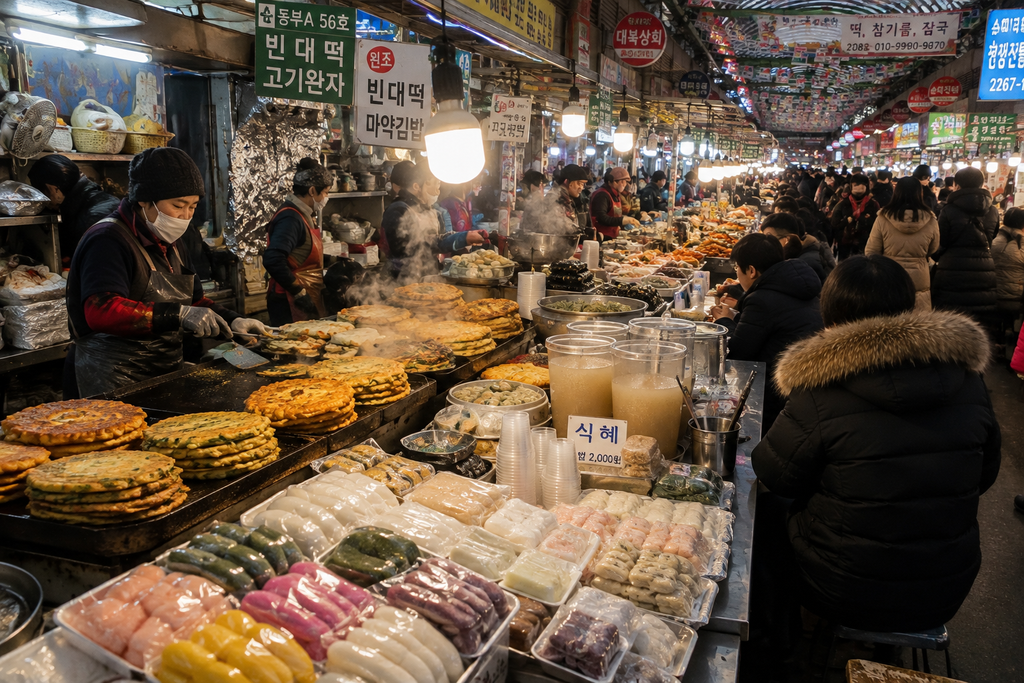
In February, there is something especially satisfying about stepping in from the cold and finding yourself surrounded by hot griddles, steaming pots, crowded food stalls, and people eating shoulder to shoulder in their winter coats.
Gwangjang Market in Seoul is an easy example. You can walk through the market without committing to one particular meal, stopping to look at stalls selling freshly cooked jeon (Korean savory pancakes), colorful tteok (rice cakes), dumplings, noodles, snacks, and cups of sweet sikhye (Korean rice drink).
I actually think this is part of the fun. You do not necessarily need to arrive with a checklist of famous foods. Wander first, see what looks good, and try a few things as you go.
Markets are also a nice February activity because they give you a completely different kind of indoor break from a café or shopping mall. They are busy, sometimes chaotic, full of smells and sounds, and very much part of everyday food culture in Korea.
Just remember that famous markets can become crowded, particularly around popular meal times. If you prefer having room to look around before deciding what to eat, I would avoid arriving at the absolute peak of lunch or dinner.
For me, a winter market stop is less about escaping February and more about enjoying one of the things that makes cold weather in Korea feel good.
Air Quality in Korea in February
February in Korea is generally cold and dry, and air quality is another thing worth checking during your trip.
Fine dust levels can vary considerably from one day to the next. You may have a crisp winter day with clear blue skies, followed by a day when the air looks hazier and outdoor conditions are less pleasant. I would not assume that February will have poor air throughout your trip, but I also would not ignore the possibility.
The easiest approach is to check the daily air-quality forecast along with the weather forecast each morning. On a good-air day, take advantage of it for palaces, neighborhoods, viewpoints, and longer outdoor walks. If air quality is poor, that can be a good day to shift more of your itinerary toward museums, shopping, cafés, exhibitions, or other indoor activities.
You will often hear the term “fine dust” (미세먼지, mise-meonji) in Korea. Air-quality information commonly distinguishes between PM10 and the smaller PM2.5 particles, so do not be surprised to see both measurements in Korean weather and air-quality reports.
If you are particularly sensitive to air pollution, it is worth bringing a well-fitting mask and keeping your schedule flexible rather than planning every day around fixed outdoor activities.
My advice: check temperature, wind, and air quality together. A February day that looks similar on a weather app can feel very different depending on those three things.
The Pros and Cons of Visiting Korea in February
Why I would consider February
February can be a good choice if you enjoy winter but want to visit toward the later part of the season.
Skiing and snow activities are still possible, Seoul can feel less crowded than during the major spring and autumn travel periods, and cold weather gives you a very good excuse to enjoy Korea’s markets, hot food, cafés, museums, shopping, and other indoor experiences between sightseeing stops.
Clear winter days can also be beautiful. Bare trees and crisp blue skies create a completely different atmosphere from cherry blossom season or autumn foliage, and you can experience major sights without choosing the same months as almost everyone else.
February can also be interesting if your trip happens to overlap with Seollal. It requires more planning, particularly for intercity transportation, but it can give you a glimpse of Korea during one of its most important traditional holidays.
Why I might choose another month
February is still cold enough to shape your itinerary. If your dream trip involves walking outside for hours every day, sitting outdoors, packing light, or exploring from early morning until late at night without weather breaks, another month will probably be easier.
Snow in Seoul is not guaranteed, so February is also a poor choice if your entire reason for visiting is to see the capital covered in snow.
And perhaps most importantly, February is not a shortcut to spring. If you are choosing it because you imagine blossoms, mild evenings, green parks, and comfortable spring weather, you are simply arriving too early.
Is February a Good Time to Visit Korea?
February works particularly well if you want a mix of outdoor sightseeing and indoor experiences, would like the option of a ski or snow day, and do not mind dressing properly for cold mornings and evenings.
It is less appealing if weather comfort is one of your highest priorities. For a first trip to Korea centered on long days of walking and sightseeing, I would still choose a milder part of spring or autumn over February.
But February has something those seasons do not: the feeling of Korea at the very end of winter. Markets feel warmer, hot food feels better, clear days can be wonderfully crisp, and by late February you may occasionally catch the first subtle signs that the season is beginning to change.
Just do not mistake those signs for spring itself.
My Verdict on Korea in February
Come in February if you are happy to experience the final stretch of a Korean winter. Choose another month if what you really want is early spring.
I would pack a proper winter coat, keep the itinerary flexible, choose clear days for longer outdoor plans, and deliberately enjoy the parts of Korea that cold weather makes better—hot food, traditional markets, cozy indoor stops, and perhaps one last snow day outside Seoul.
February would not be my first recommendation for travelers whose main goal is effortless weather. But for someone who likes winter, dislikes peak-season crowds, or simply wants to experience Korea at a quieter time of year, I would absolutely consider it.
Still deciding when to come? Compare February with every other month in my Best Time to Visit Korea: Month-by-Month Guide.
Coming earlier in winter? Read my complete guide to Korea in January.
Planning a trip in March? Read my complete guide to Korea in March for weather, what to wear, and what the first signs of spring really feel like in Korea.
Frequently Asked Questions About Korea in February
Is February very cold in Korea?
Yes. February is still winter in Korea, and Seoul can have freezing mornings and evenings. Temperatures gradually become milder as the month progresses, but I would still pack a proper winter coat and cold-weather accessories.
Does it snow in Seoul in February?
It can snow in Seoul in February, but snowfall is unpredictable and snow may not stay on the ground for long. If seeing snow is important to you, plan a ski resort or mountain trip rather than relying on snowfall in Seoul.
What should I wear in Korea in February?
Pack a warm winter coat or padded jacket, layers, gloves, a scarf, warm socks, and comfortable walking shoes. Late February can occasionally feel milder during the day, but I would still pack for winter rather than early spring.
Is February a good time to ski in Korea?
Yes. February is still part of Korea’s ski season, although conditions and closing dates vary by resort and year. If you are traveling late in the month, check current snow conditions and resort operations before making the trip.
Is February a good time for a first trip to Korea?
It can be if you enjoy winter and do not mind planning around the cold. But if comfortable weather and long days of outdoor sightseeing are your priorities, I would choose a milder month in spring or autumn instead.
Does Seollal always happen in February?
No. Seollal follows the lunar calendar, so its dates change every year and it can fall in January or February. If it overlaps with your trip, check transportation availability and individual business or attraction hours in advance.