Korea in January: Weather, What to Wear & Things to Do
January in Korea is properly cold. Not the kind of winter where you throw on a cute coat, take a few photos, and forget about the weather. January is usually one of the coldest parts of the Korean winter, and on a windy day in Seoul, you will feel it.
But that doesn’t mean January is a bad time to visit Korea. If you pack properly and plan your days a little differently, winter here has its own rhythm: cold walks followed by warm cafés, steaming bowls of soup, heated ondol floors, indoor shopping, ice skating, and ski trips outside Seoul.
I live in Seoul, and January is not the month I would automatically recommend to every first-time visitor. But if you genuinely enjoy winter—or you want to experience Korea when it feels completely different from the cherry-blossom and autumn-leaves version you usually see online—January can be a surprisingly memorable time to come.
January in Korea at a Glance
Weather: Cold, dry, and often windy. January is typically one of the coldest times of the year in Korea.
Best for: Travelers who genuinely enjoy winter, skiing and snow activities, cozy cafés, hot Korean food, shopping, and a mix of indoor and outdoor sightseeing.
Think twice if: You dislike serious cold, want to spend most of your trip walking outdoors, or are coming mainly because you expect Seoul to be covered in snow.
What to pack: A genuinely warm coat or padded jacket, thermal layers, gloves, a scarf, warm socks, and comfortable winter shoes. Hand warmers are easy to buy once you arrive.
Snow: Possible in Seoul, but never something I would plan an entire January trip around. If snow is important to you, add a ski resort or a mountain area to your itinerary.
My take: January wouldn’t be my first recommendation for everyone visiting Korea for the first time. But for the right traveler, it offers a very real Korean winter—cold streets, warm floors, steaming food, and that wonderful feeling of finally getting indoors after being outside.
What January Really Feels Like in Korea
January cold in Korea is not decorative winter cold. It can be sharp, dry, and surprisingly tiring if you are outside for hours. In Seoul, the wind between buildings can make an ordinary winter day feel much colder than the number on your weather app suggests.
If you are used to winters in places like New York, the temperature itself may not shock you. What makes a difference is how much time travelers spend outdoors. A normal sightseeing day in Seoul can mean walking between palaces, neighborhoods, markets, cafés, and subway stations for hours—and in January, that changes how I would plan the day.
I wouldn’t schedule one long outdoor itinerary from morning to evening. I would break it up: walk around a palace or neighborhood, warm up over lunch, spend some time indoors, then head outside again. Korea makes this surprisingly easy. Cafés, department stores, museums, subway stations, restaurants, and shops are everywhere, so warming up can simply become part of the day rather than an interruption to it.
And honestly, some of my favorite things about a Korean winter happen because it is so cold outside. Coming home to a warm ondol floor, opening a hand warmer in your pocket, or sitting down in front of a bubbling bowl of soup feels completely different in January. Galbitang, gomtang, seolleongtang, yukgaejang, budae-jjigae—foods that are comforting at any time of year suddenly feel like part of the winter experience.
January Weather in Seoul: How Cold Does It Get?
Seoul is at its coldest in January. According to Korea’s official 1991–2020 climate normals, January is the coldest month of the year in Seoul, with an average monthly temperature of about −1.9°C (28.6°F). It is also the driest month, with only about 16.8 mm (0.7 in) of precipitation on average.
That monthly average can be a little misleading for travelers, though. Mornings and evenings are colder than the average suggests, and cold spells can push temperatures well below freezing. At the same time, a sunny afternoon can feel surprisingly manageable—until the wind picks up.
January is also relatively dry. This is very different from Korea’s humid summer weather: you may notice dry skin and lips before you notice anything resembling a damp winter chill. I always think of Korean winter as a cold-and-dry season rather than a wet-and-grey one.
And Korea is not climatically identical from north to south. Mountainous areas and inland regions can be considerably colder, while southern cities and Jeju are generally milder than Seoul. So if your January itinerary takes you beyond the capital, check the forecast for each destination rather than packing for “Korea” as if it were one temperature.
Don’t plan by the average temperature alone
If your weather app says 2°C (36°F), that does not necessarily mean “light jacket weather.” You may be walking outside for hours, standing around taking photos, crossing exposed plazas, or waiting for a bus. Wind and time outdoors matter. For a sightseeing trip in January, I would rather be slightly overdressed than spend half the day thinking about how cold I am.
Does It Snow in Seoul in January?
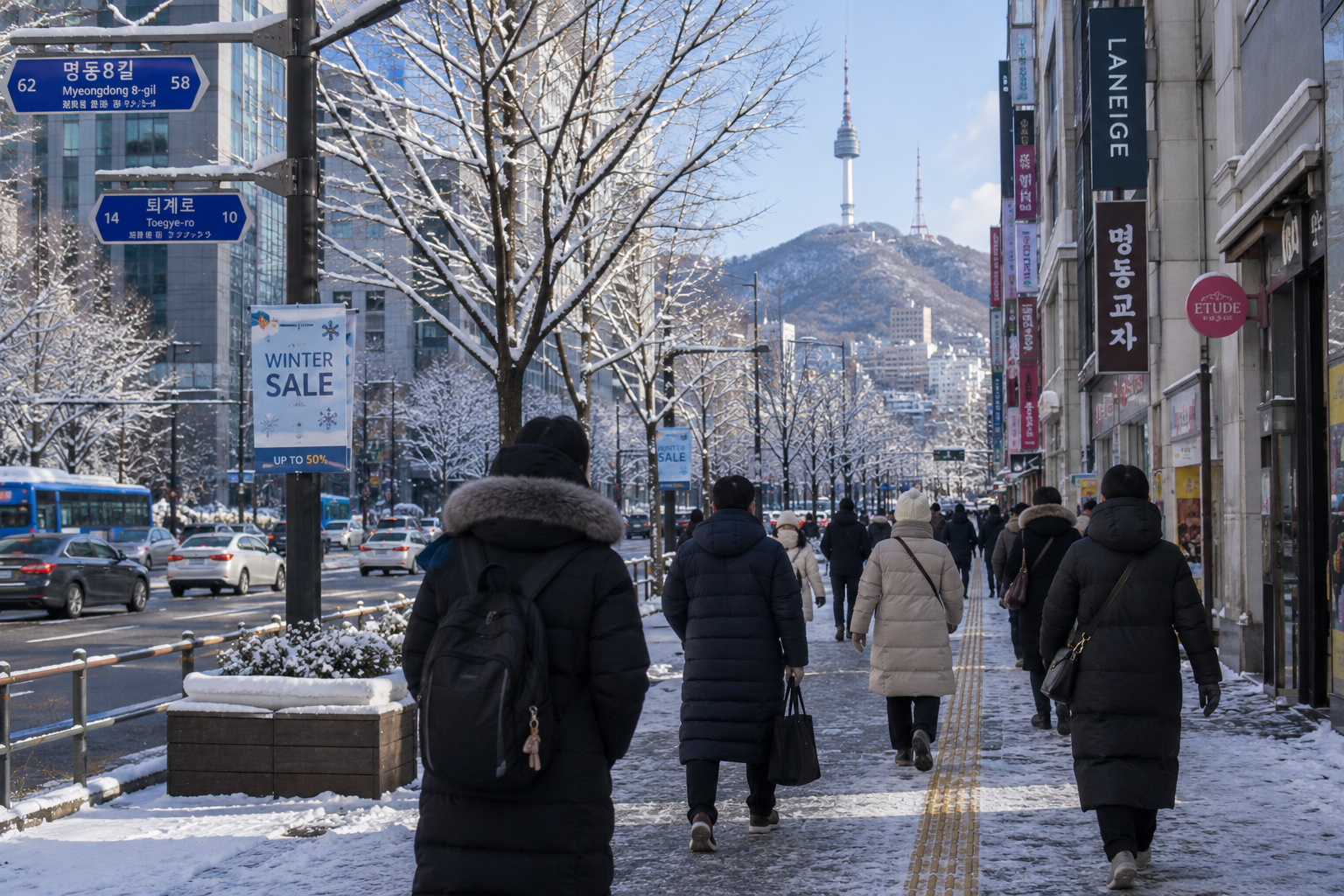
Yes, it can snow in Seoul in January—but I would never book a January trip expecting to see the city covered in snow.
This is one of the biggest misconceptions I see about winter travel in Korea. January is cold enough for snow, but cold weather does not mean constant snowfall. Seoul can go through long stretches of clear, dry winter weather, and when snow does fall, it may be light or disappear relatively quickly.
So if your dream is to photograph Gyeongbokgung Palace under fresh snow, think of it as a lucky bonus rather than something you can schedule. You might wake up to a beautiful white Seoul—or spend your entire trip under crisp blue winter skies without seeing meaningful snowfall at all.
If snow itself is an important part of your trip, I would build it into the itinerary rather than leave it to chance. Ski resorts and mountainous areas, particularly in Gangwon Province, are a much better bet for a proper snow experience than simply waiting for it to snow in central Seoul.
What if you really want to see snow?
Consider spending a day or two at a ski resort or adding a mountain destination to your trip. You do not necessarily have to be an experienced skier, either. Many winter resorts offer beginner slopes, sledding, gondolas, and other snow activities, so you can still enjoy a Korean winter landscape without planning your entire holiday around skiing.
My rule would be simple: come to Seoul for Seoul, and go to the snow for snow. If the two happen to meet while you are here, even better.
What to Wear in Korea in January
If you are visiting Korea in January, this is not the month to prioritize a cute winter outfit over warmth. You can absolutely dress well—but build the outfit around proper winter layers first.
In Seoul, you will see plenty of people wearing padded jackets and long padded coats that reach well below the knees. There is a reason for that. When you are walking around the city for hours, a coat that blocks the wind and keeps your whole body warm makes a much bigger difference than you might expect.
I would start with a warm base layer, add a sweater or fleece depending on the forecast, and wear a properly insulated outer layer. Gloves and a scarf are not just optional accessories on colder days, especially if you plan to spend a lot of time outdoors. Warm socks matter too.
For shoes, I would choose comfort and warmth over anything delicate. Seoul involves a lot of walking, stairs, subway stations, and uneven outdoor surfaces. If there has recently been snow or ice, sidewalks can also be slippery in places.
My January packing essentials
- A warm padded or insulated coat
- Thermal base layers
- Sweaters or fleece for layering
- Gloves and a scarf
- Warm socks
- Comfortable winter shoes with decent grip
- Lip balm and moisturizer
- A small portable hand warmer or disposable heat packs
You do not need to bring a suitcase full of heat packs from home. Disposable hand warmers are inexpensive and easy to find in Korea during winter, and you will see different versions for pockets, the body, and even feet. On a particularly cold sightseeing day, they are one of those small things that can make a surprisingly big difference.
One mistake I wouldn’t make
Don’t dress for the five minutes between your hotel and a taxi. Dress for the longest outdoor part of your day. A January itinerary that includes a palace, a traditional neighborhood, a market, and an evening walk can mean much more time outside than you realize when you are planning it from home.
Things to Do in Korea in January
January is not the month when I would plan to stay outdoors from breakfast until dinner. The trick is to use winter as part of the trip rather than spend the entire day fighting it.
In Seoul, I like the idea of alternating between outdoor sightseeing and warm indoor stops. Visit a palace or walk through a neighborhood in the morning, have a long hot lunch, spend part of the afternoon in a museum, café, department store, or shopping area, and then head outside again later. You can still see plenty of Seoul—you just need a different rhythm from a spring or autumn trip.
And if you actually love winter, January gives you experiences that simply do not exist in the warmer months. Ski season is underway, outdoor ice rinks are operating, winter food tastes especially good, and even an ordinary café break feels much more satisfying after you have been walking through the cold.
1. Go ice skating in the middle of Seoul
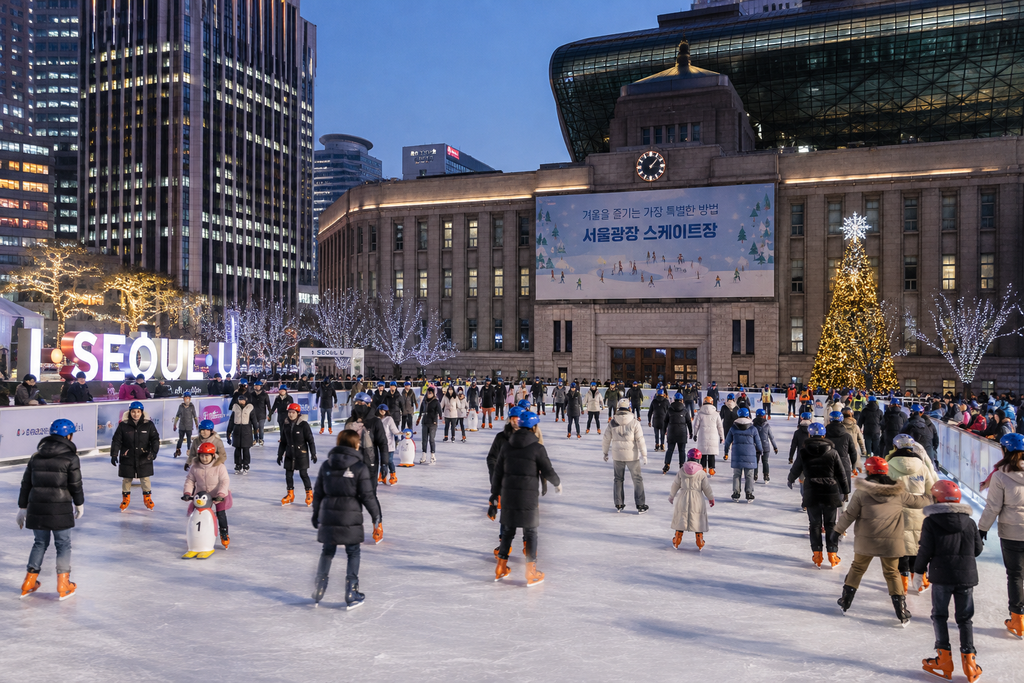
One of my favorite easy winter activities is ice skating at Seoul Plaza, right in front of Seoul City Hall. When the seasonal rink is operating, it is an inexpensive and very accessible way to add something distinctly wintry to a day in central Seoul.
I especially like it because you do not need to dedicate an entire day to the activity. You can combine it with nearby sights, shopping, cafés, or an evening walk through central Seoul. If you are traveling with children, it can also be a nice break from a sightseeing schedule that has started to feel a little too serious.
The rink is seasonal, so always check the current winter schedule before you go.
2. Take a ski or snow day outside Seoul
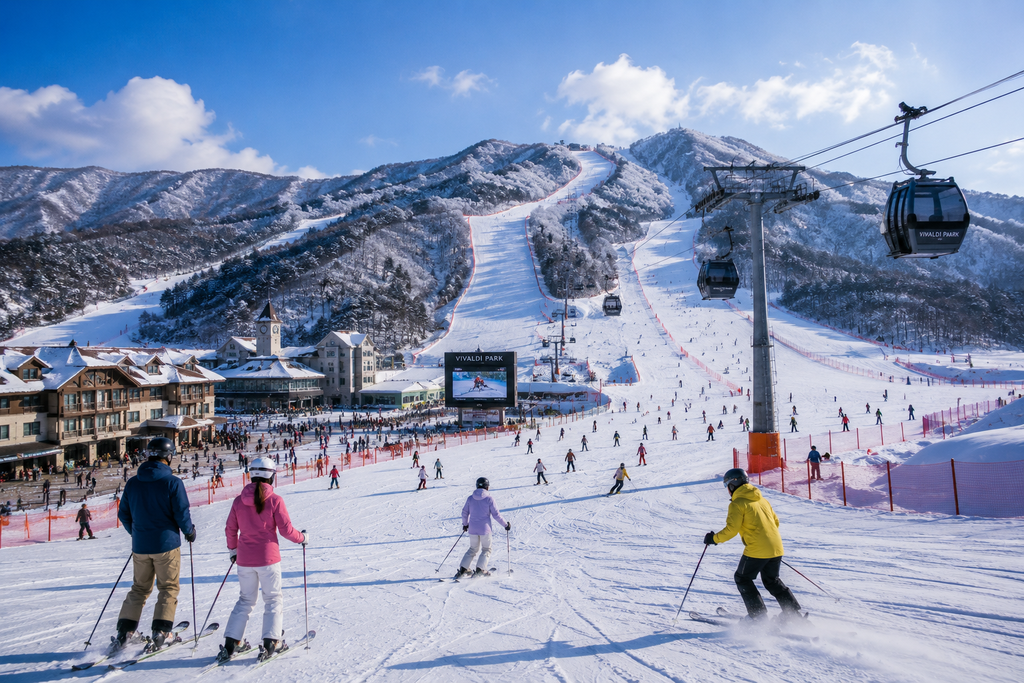
If you came to Korea hoping for a proper snow experience, January is a great time to leave Seoul for a day—or longer—and head toward one of Korea’s winter resort areas.
Gangwon Province is the obvious choice for skiing and snow sports, and there are resorts that work for complete beginners as well as experienced skiers. Even if you do not ski, a winter resort can still be worth considering for sledding, snowy scenery, gondola rides, or simply spending a day somewhere that actually looks and feels like the winter trip you imagined.
For travelers staying mainly in Seoul, I would think of this as a deliberate “snow day” rather than hoping the weather in the capital cooperates.
3. See Seoul’s outdoor sights—but don’t overdo it
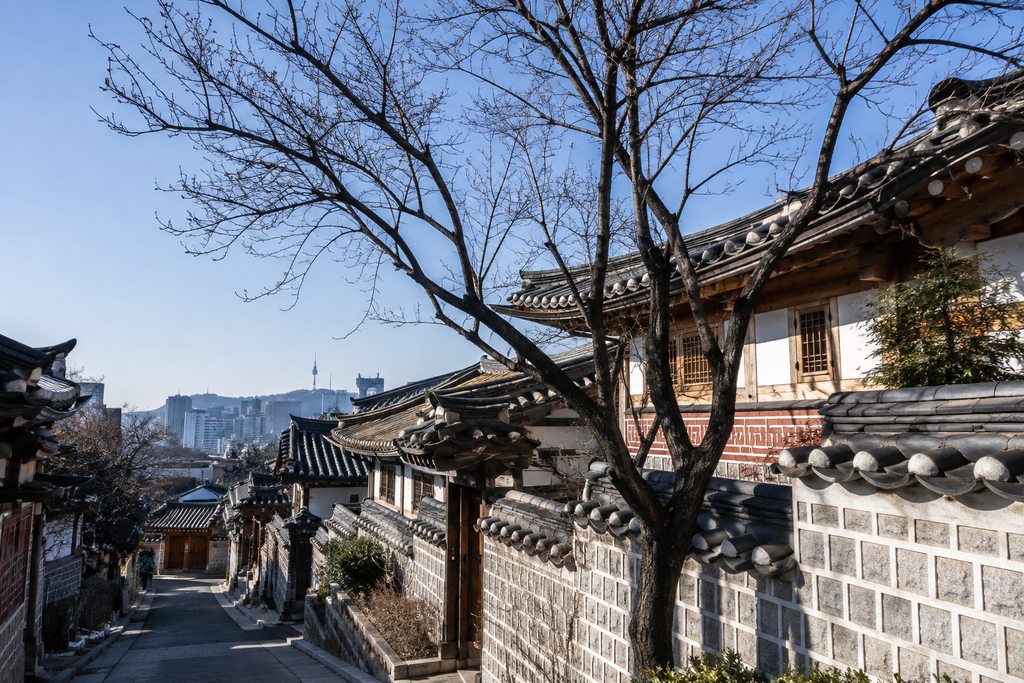
January does not mean you have to avoid places like Gyeongbokgung Palace, Bukchon, Insadong, or Seoul’s traditional neighborhoods. In fact, crisp winter air and fewer leaves can give historic areas a completely different atmosphere.
But I would be selective. Pick one outdoor area you genuinely want to experience, enjoy it properly, and then warm up. Trying to chain together several large outdoor attractions just because they look close on a map can turn a beautiful winter day into an endurance test.
4. Make indoor Seoul part of the itinerary
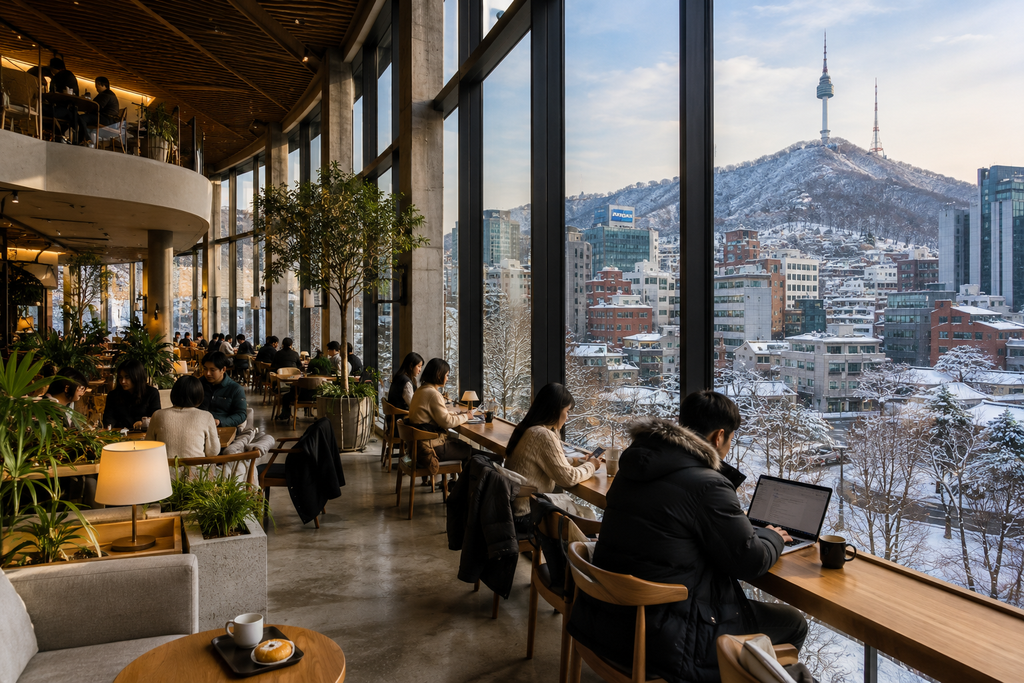
Indoor time in January does not have to mean “wasting” part of your trip. Seoul has museums, exhibitions, enormous department stores, underground shopping areas, cafés, markets, beauty experiences, and plenty of places where being indoors is part of the experience itself.
This is also a good month to enjoy the parts of modern Korean life that are easy to rush past in perfect weather: spend longer over coffee, explore a department store food hall, browse Olive Young without feeling guilty about missing the sunshine, or take your time over dinner.
5. Let winter food become an activity
In January, I would absolutely plan meals as part of the sightseeing. This is the season when I crave dishes that arrive steaming hot: galbitang, gomtang, seolleongtang, yukgaejang, budae-jjigae, kalguksu, and plenty of other Korean comfort foods.
There is something very Korean about coming in from a freezing street, taking off your heavy coat, and sitting down in front of a hot bowl or bubbling pot. You are not just stopping because you need lunch—you are warming yourself back up before heading into the city again.
Add street snacks like hotteok or warm eomuk along the way, and suddenly the cold becomes part of the memory rather than simply something you had to tolerate.
Visiting Korea in January with Kids
January can work surprisingly well for a family trip to Korea, but I would plan it differently from an adults-only trip. Children tend to notice the cold much faster when they are standing still, waiting, or walking through attractions that were chosen mainly for the adults.
I would keep outdoor sightseeing shorter and give each day an obvious warm-up point. A palace in the morning followed by a hot lunch and an indoor activity works much better than trying to walk through several neighborhoods in a row. Ice skating, sledding, aquariums, museums, cafés, shopping malls, and hands-on indoor experiences can all help break up the day.
If your children enjoy snow, a ski resort or sledding day can easily become one of the highlights of the trip. Just remember that children need the same serious winter preparation as adults—warm layers, gloves, good socks, and spare items if something gets wet.
The advantage of traveling with kids in Korea is that you are rarely far from somewhere warm. Convenience stores, cafés, restaurants, subway stations, shopping centers, and indoor attractions make it relatively easy to change plans when everyone has had enough of the cold.
What About Lunar New Year?
Lunar New Year, or Seollal, is one of Korea’s most important traditional holidays—but it does not always fall in January. Depending on the year, it can fall in January or February.
If Seollal overlaps with your trip, it is worth planning around. Many Koreans travel to visit family, which can make intercity transportation much busier than usual. Some businesses and restaurants may close or operate reduced hours, while palaces, cultural attractions, and other destinations may offer special holiday programs.
This does not mean you should avoid Korea during Seollal. It simply means that this is one period when I would not leave transportation and opening-hour checks until the last minute. If you are planning to travel between cities, book early and confirm the current holiday schedule for the places you want to visit.
The Pros and Cons of Visiting Korea in January
Why I would consider January
January gives you a side of Korea that warmer-season visitors never really experience. It is a great month for skiing and winter activities, hot Korean comfort food feels especially satisfying, and cafés, shopping, museums, and indoor culture fit naturally into the trip.
If you like winter, the cold itself can become part of what makes the trip memorable.
Why I might choose another month
The cold limits how long many travelers genuinely enjoy being outdoors, especially if their dream itinerary involves hours of walking every day. Seoul snowfall is unreliable, daylight is shorter than in the warmer months, and bulky winter clothing adds another layer of effort to sightseeing.
If this is your first trip to Korea and you mainly want comfortable weather for exploring from morning until night, I would personally choose spring or autumn instead.
Is January a Good Time to Visit Korea?
Yes—for the right traveler.
I would recommend January if you genuinely enjoy winter, want to ski or spend time in the snow, love Korean comfort food, and are happy to mix outdoor sightseeing with cafés, shopping, museums, and other indoor experiences.
I would be more hesitant if your ideal Korea trip means walking outside from morning until night, sitting outdoors, exploring several neighborhoods in one day, or packing light. And if your main reason for choosing January is the hope of seeing a snow-covered Seoul, I would not rely on that alone.
For a first trip to Korea, I still think spring and autumn are easier seasons for most travelers. But “easier” does not automatically mean “better” for everyone. January has a very distinct atmosphere, and if winter is part of what you came to experience, the cold can become part of the trip rather than something that ruins it.
My Verdict on Korea in January
Come in January if you want a real Korean winter. Choose another month if you simply want the easiest weather for sightseeing.
January is cold enough that you have to plan around it, but that is also what gives the month its character. Bundle up, spend part of the day outside and part of it somewhere warm, eat food that arrives steaming at the table, and give yourself at least one proper winter experience—whether that means skating in Seoul or heading out of the city for snow.
I would not rank January among the easiest months for a first visit to Korea. But I also would not dismiss it. For winter people, it can be wonderful.
Still deciding when to come? I compare January with every other month—including the months I personally recommend most—in my Best Time to Visit Korea: Month-by-Month Guide.
Planning a trip in February?
Read my complete guide to Korea in February for weather, what to wear, things to do, and what late winter really feels like in Korea.
Frequently Asked Questions About Korea in January
Is January too cold to visit Korea?
January is one of the coldest months in Korea, but it is still very possible to travel comfortably if you dress properly and plan a mix of indoor and outdoor activities. The cold becomes much harder when you spend long stretches outside, especially after sunset.
Does it snow in Seoul in January?
It can snow in Seoul in January, but snow is not guaranteed during your trip. Even when it does snow, it may not stay on the ground for long. If seeing plenty of snow is important to you, a ski resort or a trip outside Seoul is a safer plan.
What should I wear in Korea in January?
Bring a warm winter coat, thermal layers, gloves, a scarf, warm socks, and comfortable shoes. A long padded coat is extremely common in Korea for a reason—it makes cold days much easier.
Is January a good time to ski in Korea?
Yes. January is right in Korea’s ski season and is one of the best reasons to visit during the coldest part of winter. Ski resorts outside Seoul can also give you a much more reliable snow experience than waiting for snow in the city.
Is January a good month for a first trip to Korea?
It can be, especially if you enjoy winter. But for most first-time visitors who want comfortable weather and lots of walking, I would recommend spring or autumn before January.