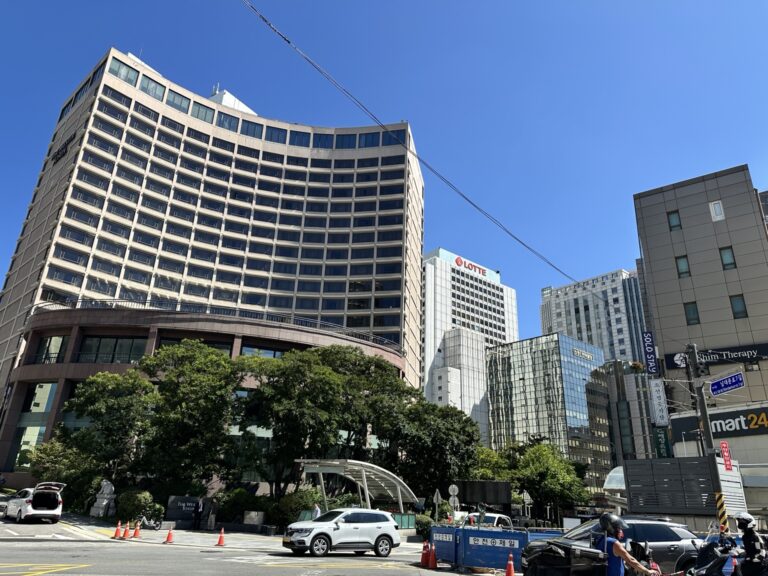
Getting Around Seoul: Subway, Bus, Taxi & Transportation Guide
Getting around Seoul is easier than it looks.
At first, the city’s transportation system can feel overwhelming. There are subway lines everywhere, buses in several colors, different transportation cards, taxi apps, and enough station exits to make “Exit 3” feel like an actual destination.
But you do not need to master all of it.
For most travelers, getting around Seoul comes down to a surprisingly simple routine:
Take the subway when you’re traveling across the city. Take the bus when the destination is nearby or the route is convenient. And take a taxi when you’re tired, carrying luggage, traveling late at night, or simply don’t feel like figuring anything else out.
That is basically how I move around Seoul too.
This guide explains the transportation system the way I would explain it to a friend visiting Seoul for the first time — what you actually need, what you can ignore, and how to choose the easiest option for each trip.
DMS Quick Take
🚇 Subway: Best for longer trips across Seoul
🚌 Bus: Great for shorter trips and neighborhoods
🚕 Taxi: Best when tired, late, or carrying luggage
💳 T-money: The easiest default transportation card
🗺️ Naver Map: My preferred app for navigating public transportation in Korea
🚲 Ttareungi: Fun for certain routes, but not essential for getting around
First: Seoul Is Much Bigger Than It Looks on a Map
One of the easiest mistakes to make when planning a Seoul trip is assuming that two places that look relatively close on a map are actually close.
They may not be.
Seoul is enormous, the Han River divides the city, mountains interrupt otherwise straightforward routes, and crossing from one side of Seoul to another can take much longer than expected.
That is why I usually think about transportation in terms of distance and energy, rather than automatically choosing one type of transportation every time.
If I’m going a few stops nearby, I often take a bus.
If I’m crossing a large part of the city, I usually take the subway.
If it’s late, raining, I’m carrying bags, or I’ve already walked 20,000 steps that day?
I take a taxi.
The best transportation option in Seoul is not always the cheapest one. Sometimes it is the one that saves your feet.
1. Seoul Subway: The Best Way to Cross the City
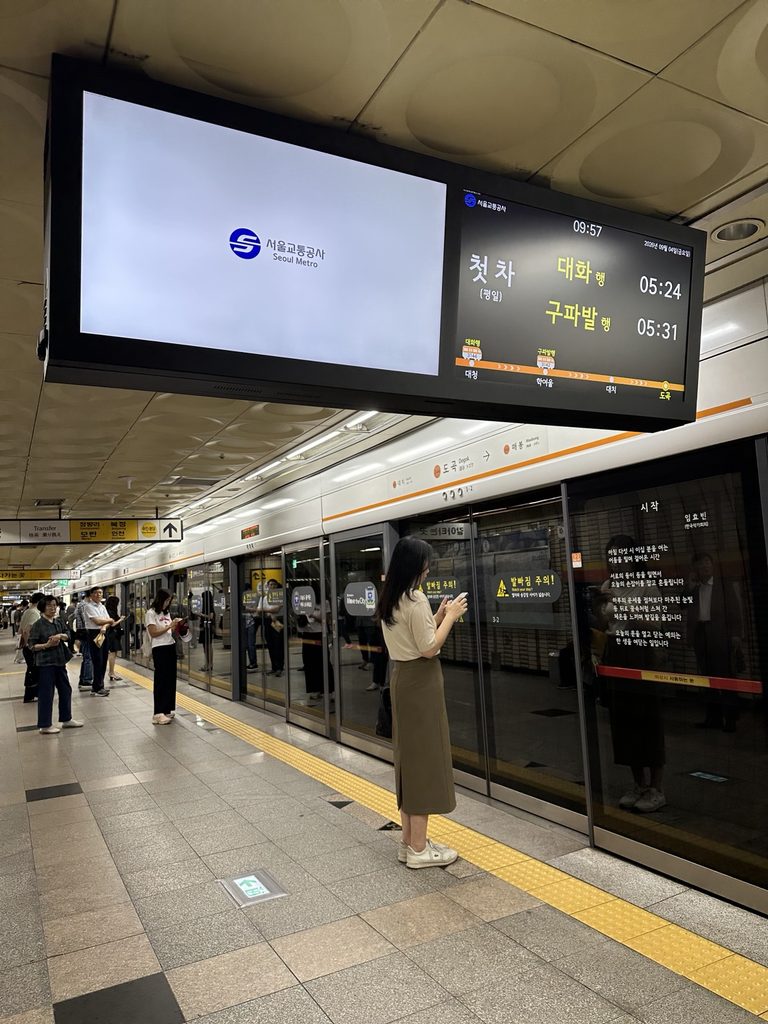
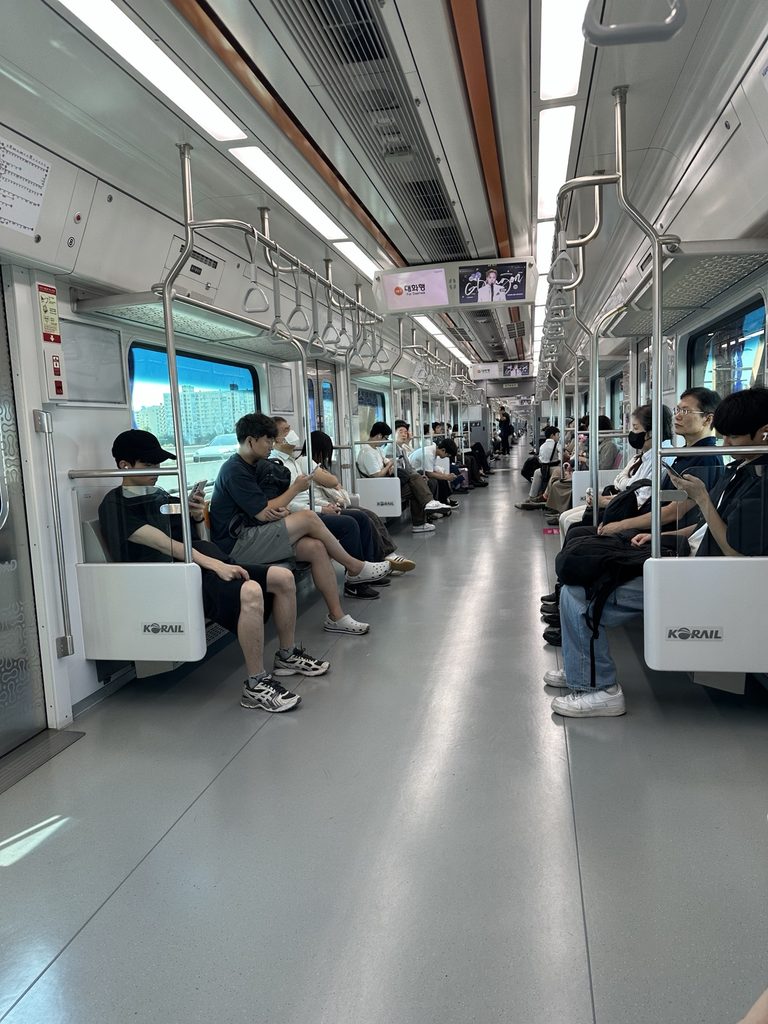
For most first-time visitors, the subway will be the backbone of your trip.
It is extensive, relatively inexpensive, clean, and connects almost every major area travelers are likely to visit — including Myeongdong, Hongdae, Gangnam, Jamsil, Jongno, Itaewon, Seongsu, and Dongdaemun.
Stations and trains generally have English signage, and major transfer stations are well marked.
The part that confuses visitors isn’t usually riding the train.
It’s getting out of the station.
Exit numbers matter more than you think
Seoul subway stations can be huge.
Some stations have more than ten exits, and coming out of the wrong one can put you across a major intersection, several blocks away, or on completely the wrong side of a neighborhood.
So when someone tells you:
“Meet me at Gyeongbokgung Station, Exit 3-1.”
The important part isn’t just Gyeongbokgung Station.
It’s Exit 3-1.
Before leaving the station, check your navigation app for the correct exit number.
This tiny habit can save a surprising amount of walking.
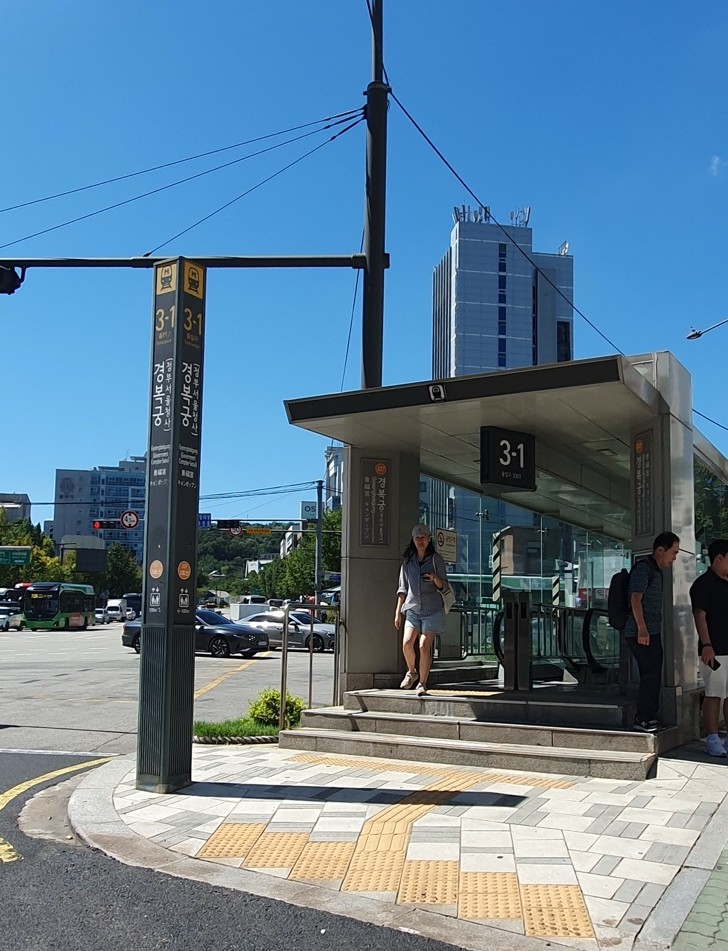
Seoul subway exits are numbered. Check the correct exit before you leave the station — especially at large stations like Gyeongbokgung Station.
Subway or Bus? Here’s How I Decide
There isn’t one correct answer.
But my personal rule is:
Short distance → check the bus first.
Long distance across Seoul → check the subway first.
The subway is especially useful when traffic is heavy because travel time is much more predictable.
That matters during rush hour.
Central Seoul can become very busy in the morning, while major business areas south of the river — including Gangnam — can become particularly congested later in the day.
If your navigation app shows a similar travel time for taxi and subway during rush hour, I would usually choose the subway.
You may actually arrive faster.
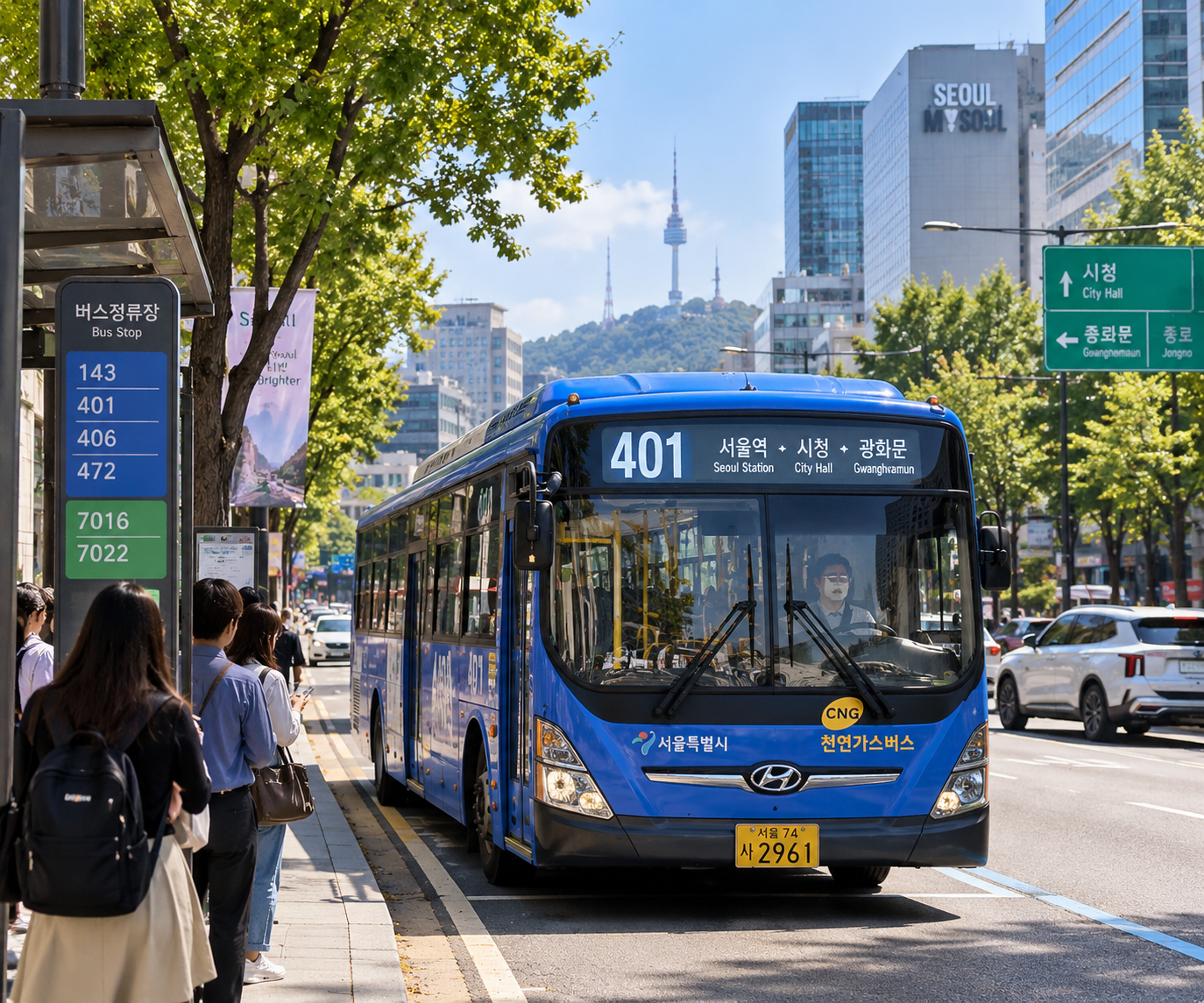
2. Seoul Buses: Easier Than Tourists Think
I think visitors underestimate Seoul buses.
They look intimidating at first because there are so many routes, but once you use navigation, you don’t actually need to understand the entire bus system.
You just need to know:
which bus to take, where to board it, and where to get off.
That’s it.
For shorter distances, I sometimes prefer the bus to the subway because there is no walking deep underground, transferring between platforms, or climbing back up through a huge station.
You also get to see Seoul while you’re moving.
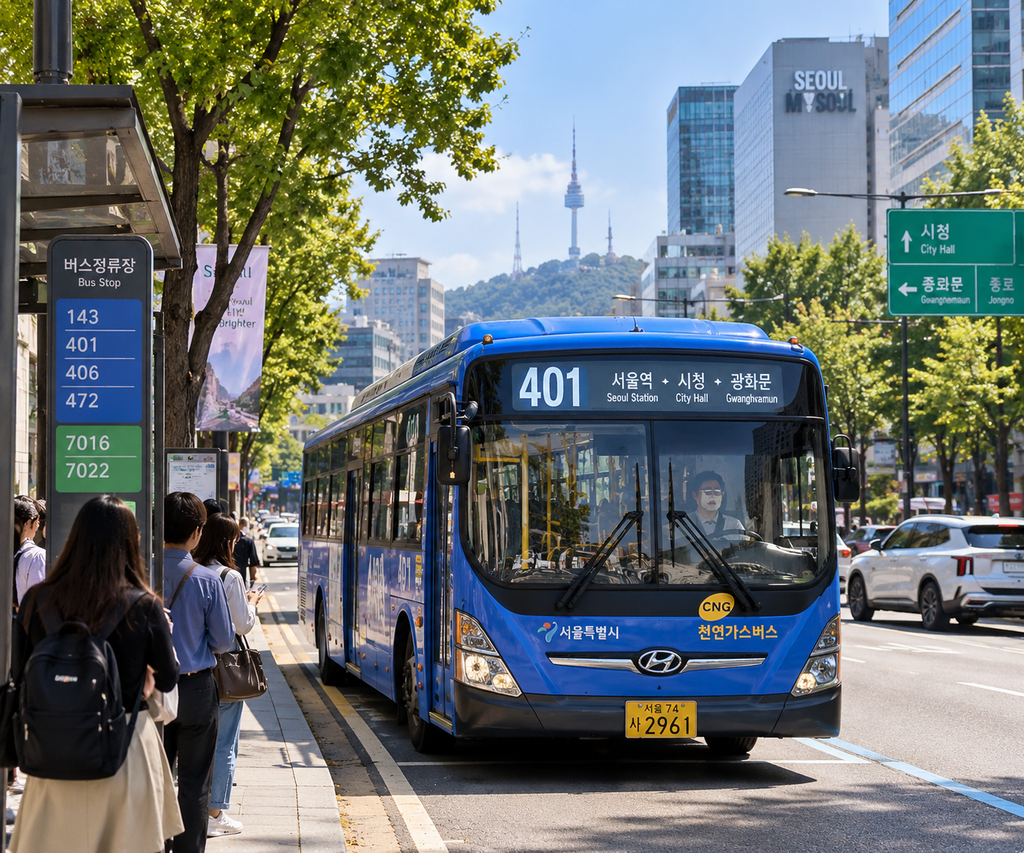
How I use buses in Seoul
I enter my destination into Naver Map, choose the public transportation option, and follow the recommended route.
The app tells you which bus to take, where the stop is, how many stops you will ride, and when to get off.
At many Seoul bus stops, electronic displays also show how many minutes remain until the next bus arrives.
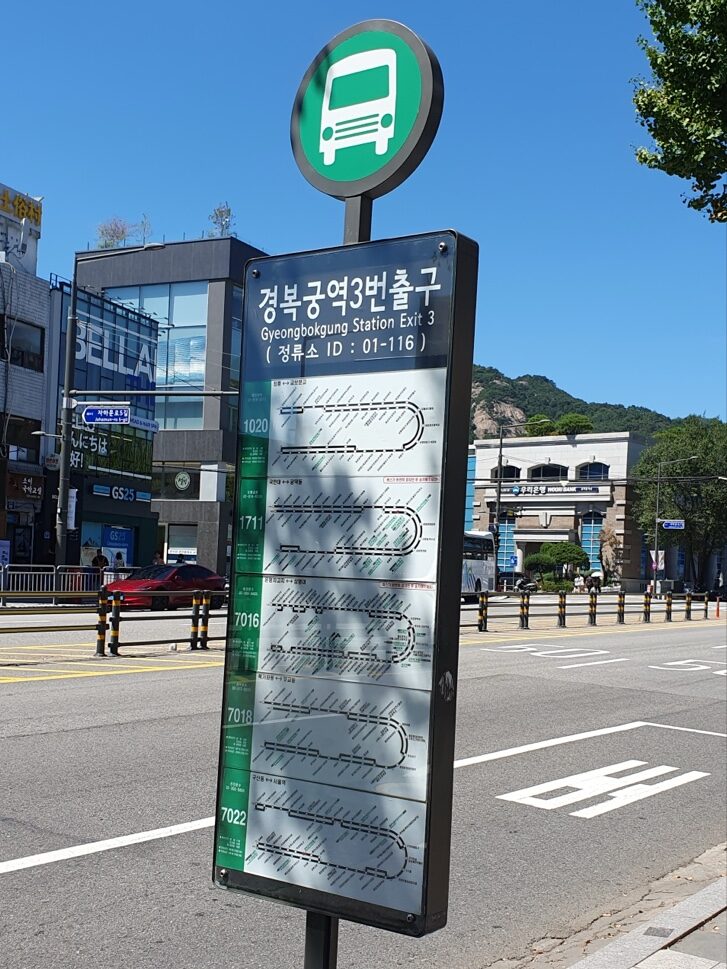
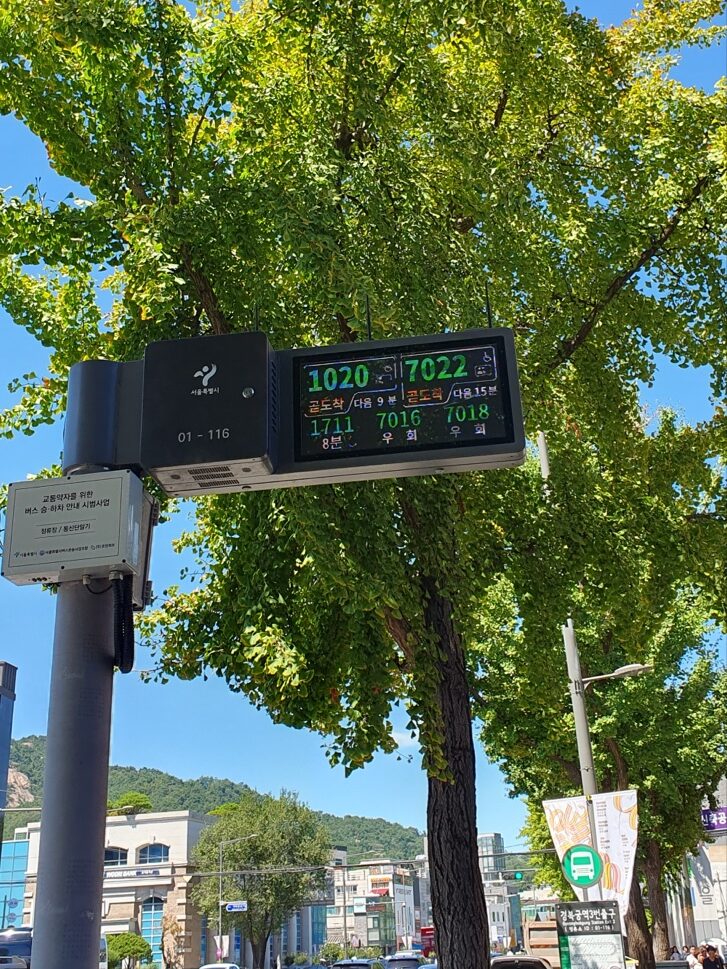
That means you don’t need to memorize Korean bus routes before your trip.
Let the app do the work.
Always tap when you get OFF the bus
This is one detail I would absolutely remember.
When using a transportation card, tap when you board and tap again when you get off.
The same principle is important when transferring between buses and subways because Seoul uses an integrated distance-based fare and transfer system.
You’ll see locals doing it automatically.
Just follow them.
3. T-money: The Simple Default for Most Travelers
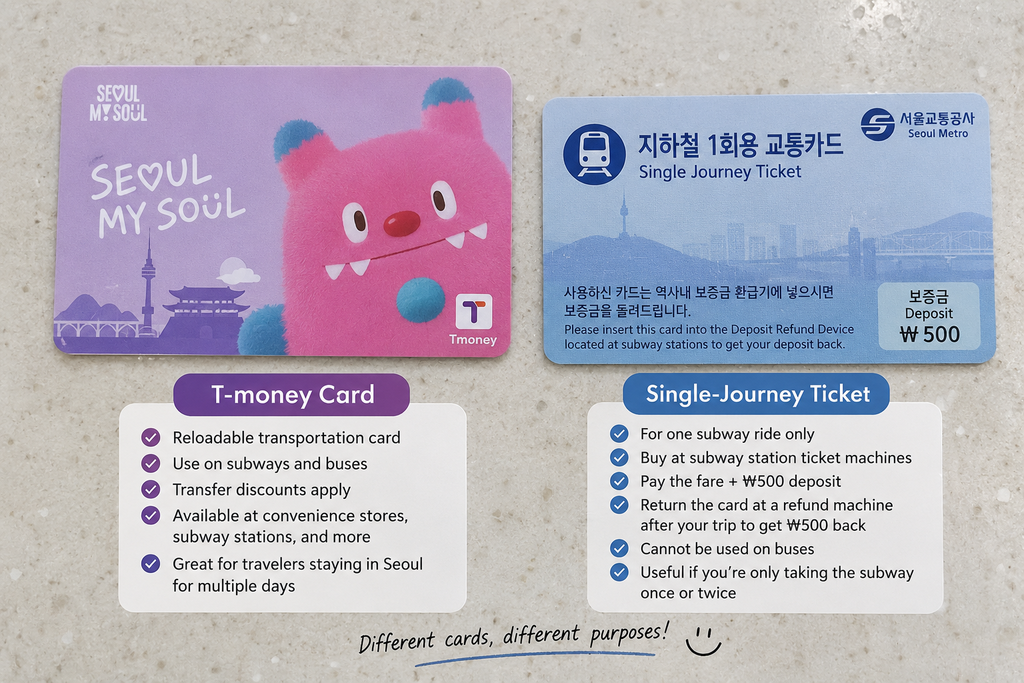
If you don’t want to think too much about transportation cards, get a T-money card.
You can use it on Seoul buses and subways and simply tap as you travel.
Cards are widely sold at convenience stores and subway-related locations, making them easy to find after you arrive. Seoul’s official transportation guidance also recommends transportation cards such as T-money for public transit.
For most travelers, I like T-money because there is very little planning involved.
Buy it. Add money. Tap. Go.
And yes:
tap out too.
T-money vs. Single-Journey Tickets
You can buy a single-journey ticket at subway stations, but if you’re staying in Seoul for more than a day, I recommend getting a T-money card instead. You can reload and reuse it on both subways and buses, and you won’t need to buy a new ticket for every ride.
4. What About the Climate Card?
If you plan to use public transportation heavily during your stay, Seoul also offers short-term Climate Card passes with unlimited rides on eligible buses and subways. For most travelers, though, I find a regular T-money card simpler and more flexible.
5. Taxi in Seoul: Uber, K.ride or Kakao T?
And now we get to the transportation option that becomes increasingly attractive around Day 4 of a Seoul trip.
Taxis.
Seoul taxis are everywhere, and compared with many major international cities, they can be a very practical part of your transportation strategy.
I especially recommend considering a taxi when:
- you’re carrying luggage
- it’s raining
- you’re traveling late at night
- you’re traveling with children
- your subway route requires awkward transfers
- you’ve spent the entire day walking
- you’re going somewhere inconvenient by public transportation
And yes:
Uber works in Seoul.
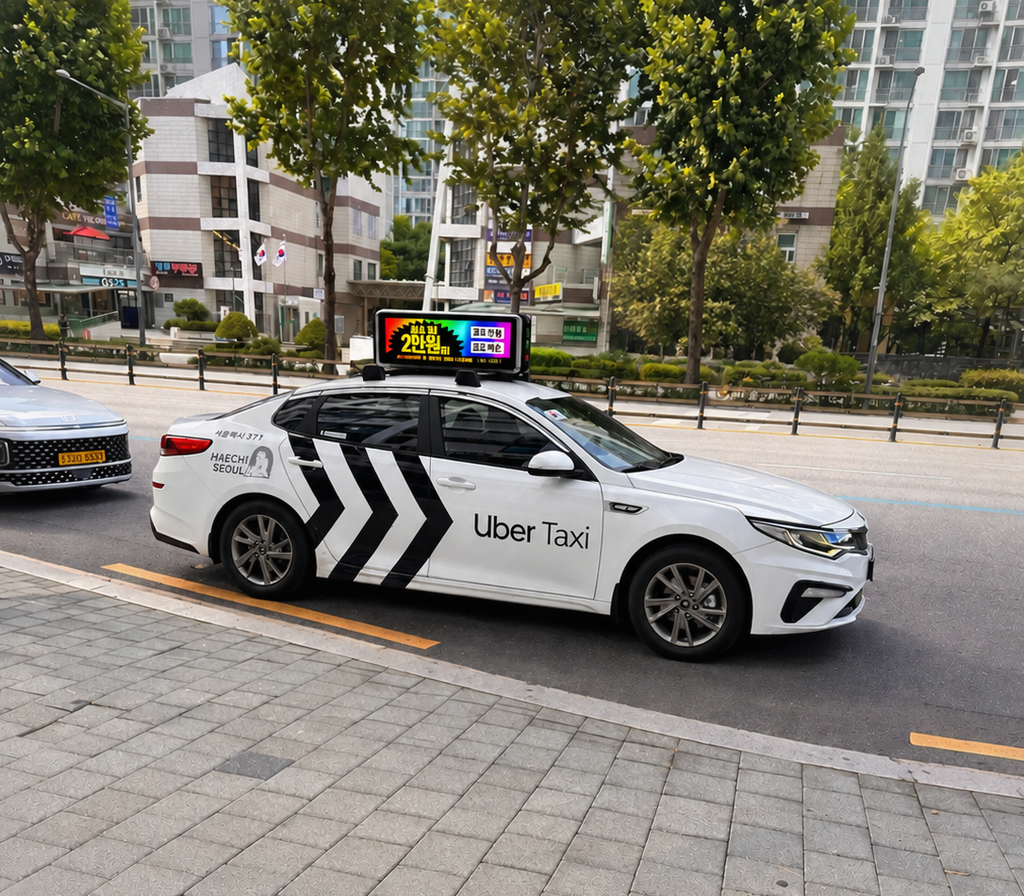
Uber Taxi in Seoul. If you already use the Uber app at home, you can use it in Seoul too.
This is probably the easiest option for many international travelers because you may already have the app on your phone.
You don’t necessarily need to learn an entirely new taxi system just because you’ve arrived in Korea.
Seoul’s official international transportation guidance specifically lists Uber-based service among taxi-app options accessible to visitors without a Korean phone number or Korean credit card.
What about K.ride?
K.ride is another option worth knowing.
It is designed for international travelers and gives visitors access to taxis through Kakao Mobility’s network without requiring the same Korean setup traditionally associated with domestic Kakao T.
So my recommendation is simple:
Already use Uber? Start there.
Want another Korea-friendly taxi option? Install K.ride too.
You don’t have to choose one app for your entire trip.
Having two options can actually be useful if one has poor availability at a particular place or time.
DMS Tip
Before getting into an app-dispatched taxi, check that the license plate matches the car shown in your app.
And if you’ve already paid through the app, don’t accidentally pay the driver again. Seoul’s official visitor guidance specifically warns travelers about double payment.
6. Naver Map vs. Google Maps in Seoul
This is another question travelers ask constantly.
My answer:
I use both — but not for the same thing.
Google Maps is familiar and can be useful for getting your bearings, looking around an area, and understanding roughly where things are.
But for actually moving around Seoul by public transportation, I prefer Naver Map.
It gives me detailed bus and subway routes, stop information, exits, and local navigation that I use in everyday life here.
So if you are coming to Korea, I would install Naver Map before your trip.
You do not need to become an expert.
Search your destination, choose a route, and follow it.
That alone solves most transportation problems.
And if you’re driving?
That’s different.
For driving in Korea, I use TMAP.
But unless you’re renting a car, you probably don’t need it for an ordinary Seoul vacation.
7. Walking Is Part of Getting Around Seoul
This deserves its own section because Seoul is not a city where you simply travel to attractions.
A lot of the experience happens between them.
You might start at Anguk Station, walk through Bukchon, continue toward Samcheong-dong, and eventually find yourself near Seochon.
Or walk through Yeonnam-dong and suddenly realize you’ve wandered much farther from Hongdae Station than you intended.
That’s normal.
And it’s one reason I don’t recommend packing every day with destinations spread all over Seoul.
Cluster places geographically whenever possible.
Your feet will thank you.
This is also why choosing the right neighborhood to stay in matters much more than people initially realize.
→ Read next: Where to Stay in Seoul
8. Ttareungi: Seoul’s Public Bikes
You’ll see rows of white-and-green bicycles all over Seoul.
These are Ttareungi (따릉이), Seoul’s public bicycles.
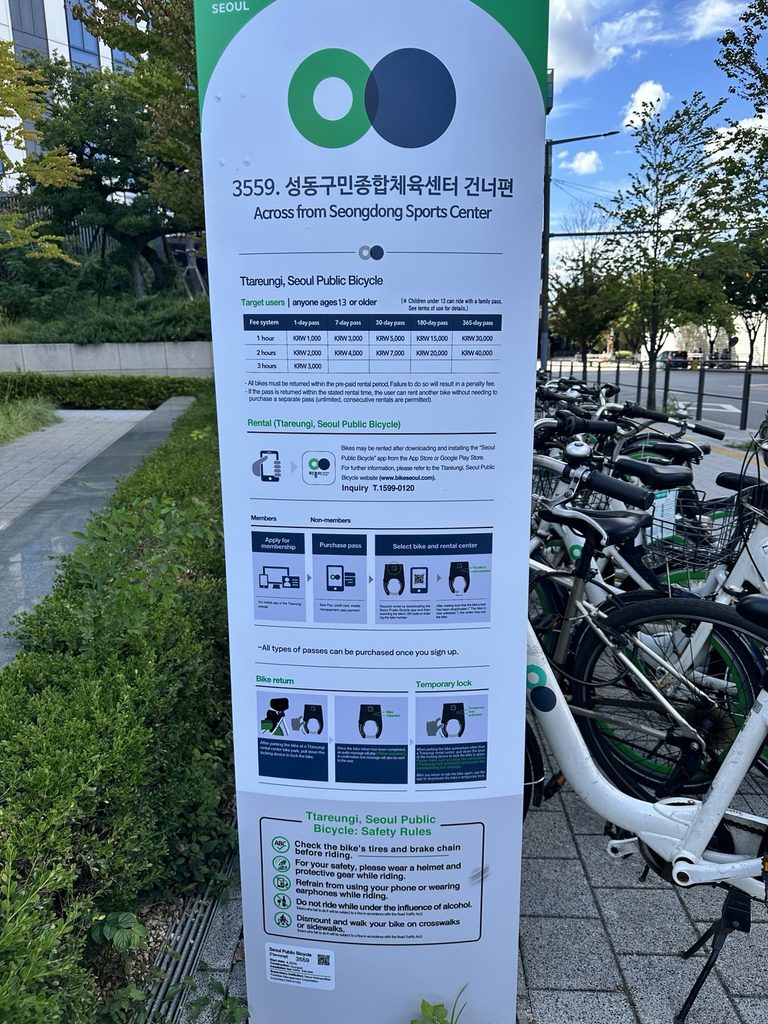
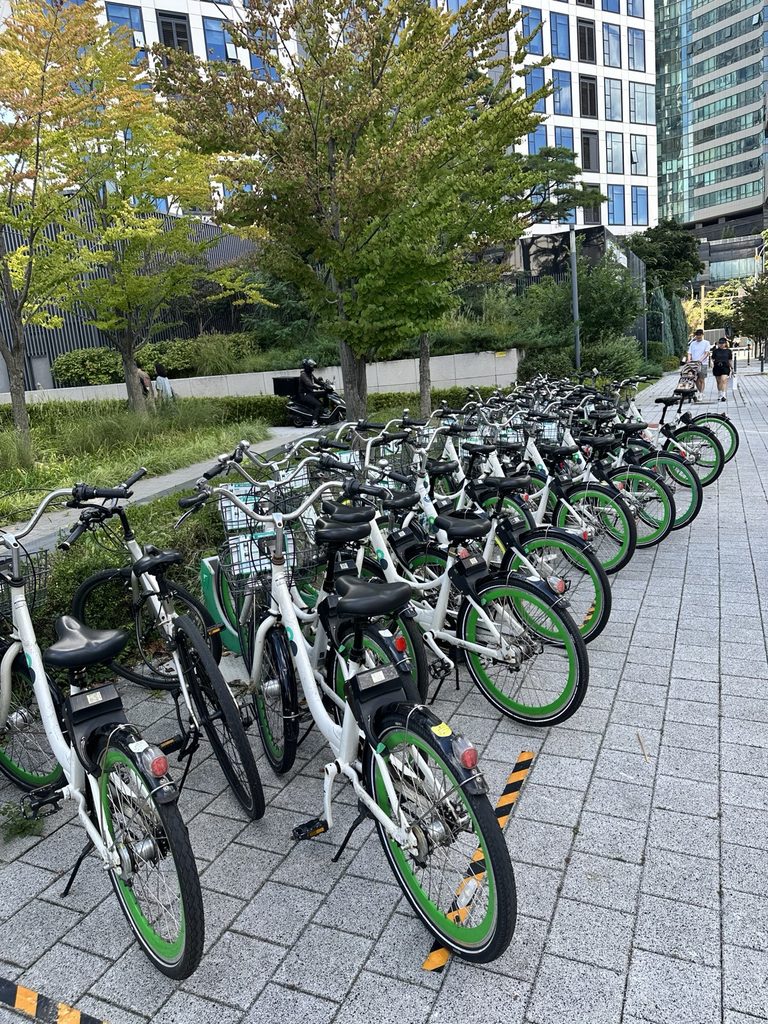
Rental stations are spread throughout the city, including near subway stations, bus stops and popular areas, and bikes can be returned to Ttareungi rental stations around Seoul.
As of 2026, single-use passes start at ₩1,000 for 60 minutes, with 120-minute and 180-minute options also available.
The system is much more foreigner-friendly than it may initially appear; the official service provides English guidance and options for international users.
Would I use Ttareungi as my primary transportation around Seoul?
No.
Would I use it on a nice day along a comfortable bike route?
Absolutely.
Treat it more like an enjoyable way to experience certain parts of Seoul than something you need to master for your trip.
9. Elevators Matter When You Have Luggage
Here’s something that sounds insignificant until you’re dragging a 25-kilogram suitcase through Seoul.
Not every subway exit is equally convenient.
Some exits have long staircases.
Some have escalators.
Some have elevators.
And the elevator may be at a completely different exit from the one your navigation app initially suggests.
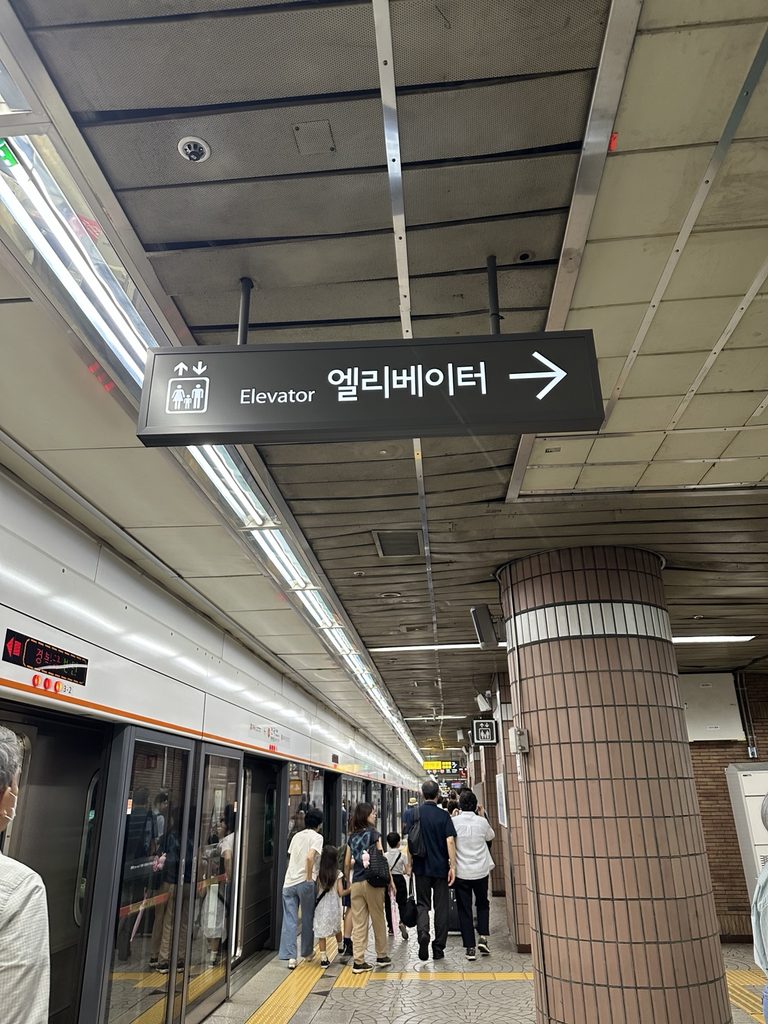
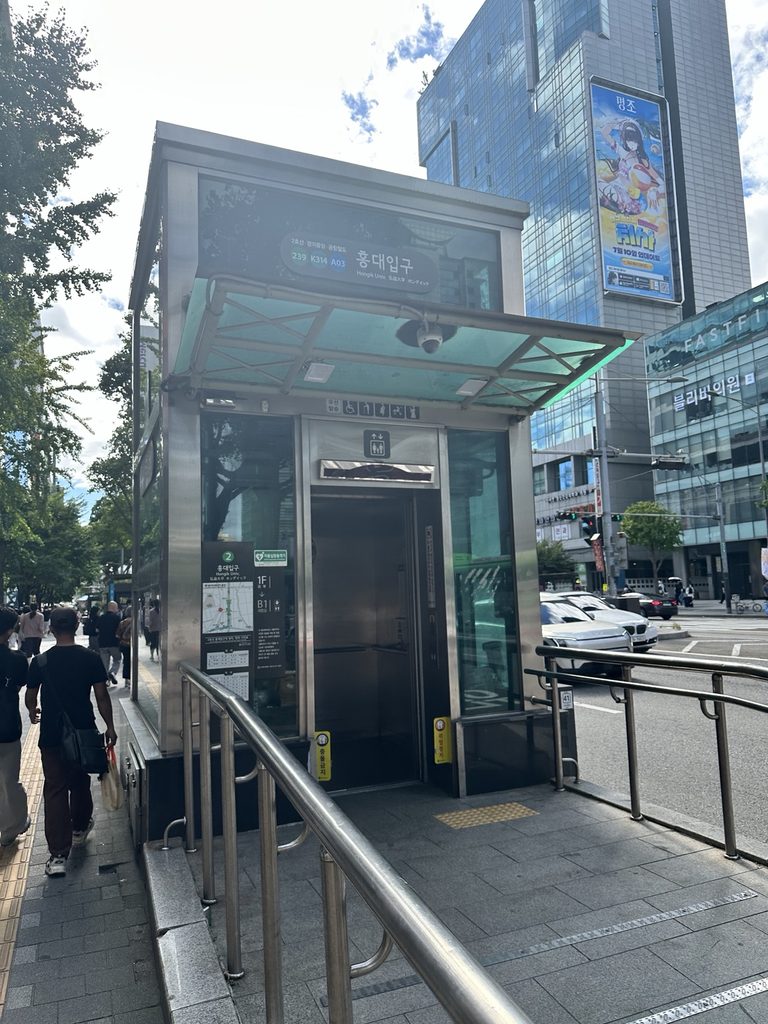
If you’re traveling with large luggage, a stroller, or someone with limited mobility, check for the elevator icon before exiting the station.
Walking an extra minute underground to reach an elevator can be much better than hauling a suitcase up several flights of stairs.
And sometimes?
Just take a taxi.
This is exactly what taxis are good for.
10. Seoul Has Small Transportation Conveniences You May Not Expect
While exploring Seoul, you’ll notice little pieces of infrastructure designed to make moving through the city easier.
For example, some bus stops have enclosed Smart Shelters.
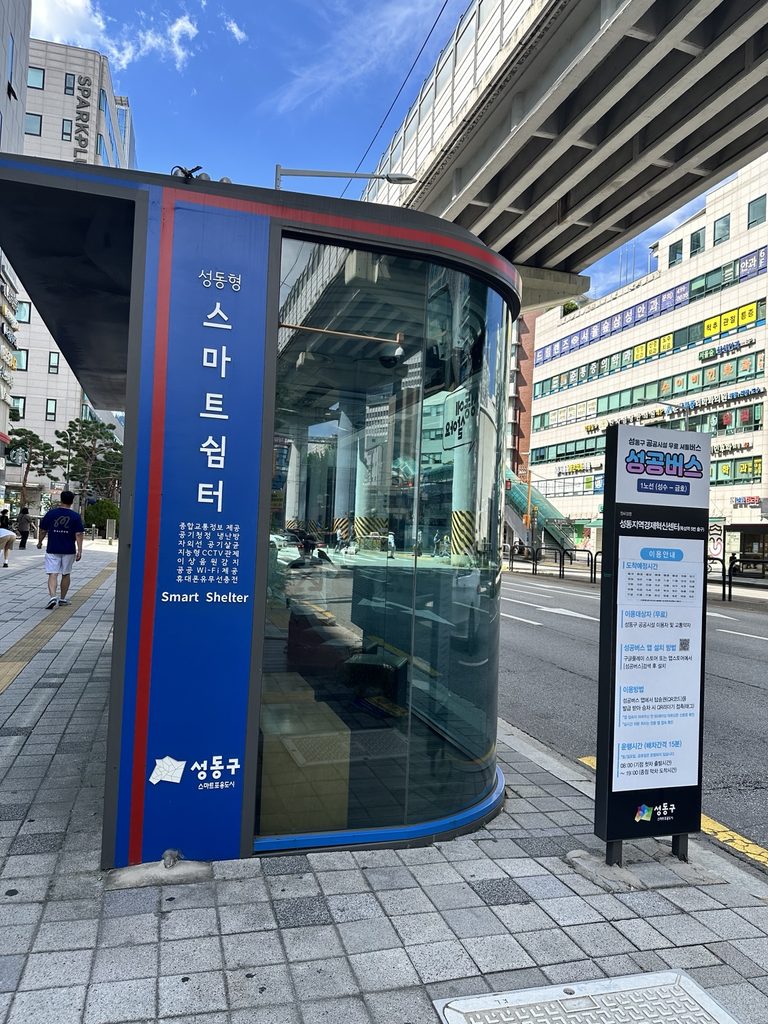
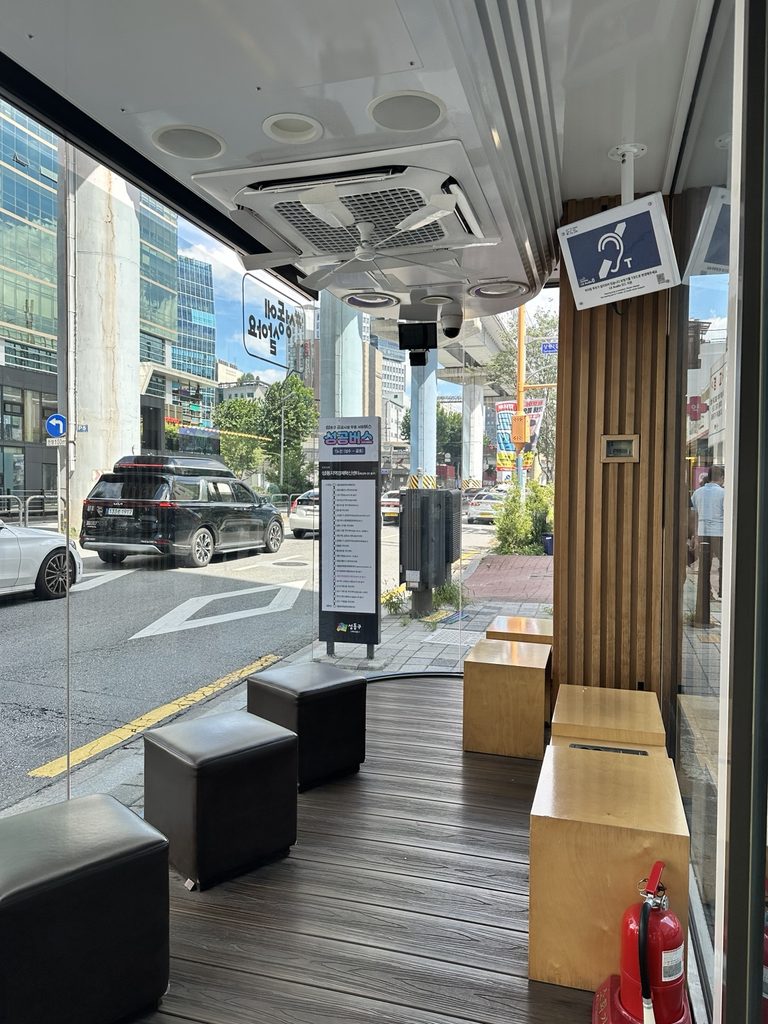
The one I visited had seating, air conditioning, real-time bus information and other amenities — a surprisingly nice place to wait for a bus on a hot day.
You’ll also find luggage lockers at some subway stations.
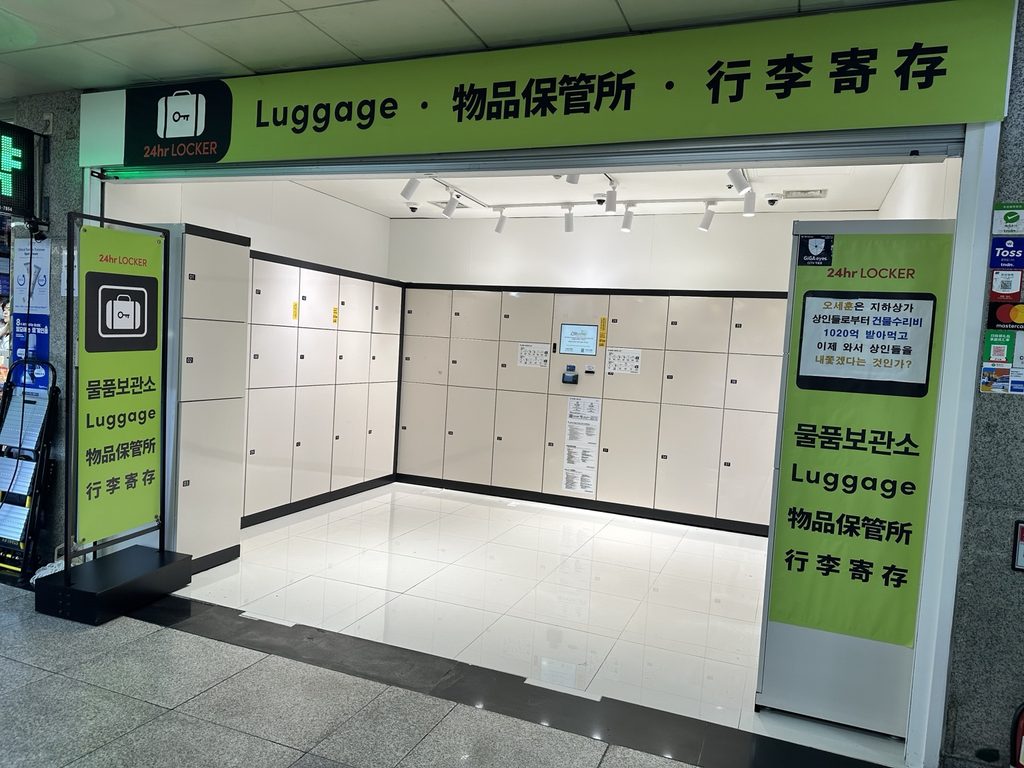
These can be useful when you’ve checked out of your hotel but still want to explore the city before moving on.
These aren’t things you need to organize your entire trip around.
But once you know they exist, they can make an awkward travel day much easier.
The Transportation Strategy I Actually Recommend
If this whole article feels like too many options, forget almost everything and remember this:
Install Naver Map.
Get a T-money card or suitable short-term transit pass.
Use the subway for longer distances.
Check buses for shorter trips.
Use Uber or K.ride when you’re tired or carrying luggage.
And group your sightseeing by neighborhood.
That’s enough.
You don’t need to understand Seoul’s entire transportation system before arriving.
After one or two subway rides and your first bus trip, it starts to feel surprisingly normal.
And eventually you’ll experience one of the most Seoul moments possible:
You’ll look at a route that says 38 minutes by subway, 35 minutes by bus, and 27 minutes by taxi…
look down at your feet…
and choose the taxi. 😂
That’s not failing at public transportation.
That’s learning how to travel Seoul.
Before You Go
Getting around Seoul becomes much easier when your itinerary is organized geographically.
Instead of bouncing between opposite sides of the city every day, choose a good base and explore nearby neighborhoods together.
Next: Where to Stay in Seoul: Best Neighborhoods for First-Time Visitors, Families, Nightlife & More